

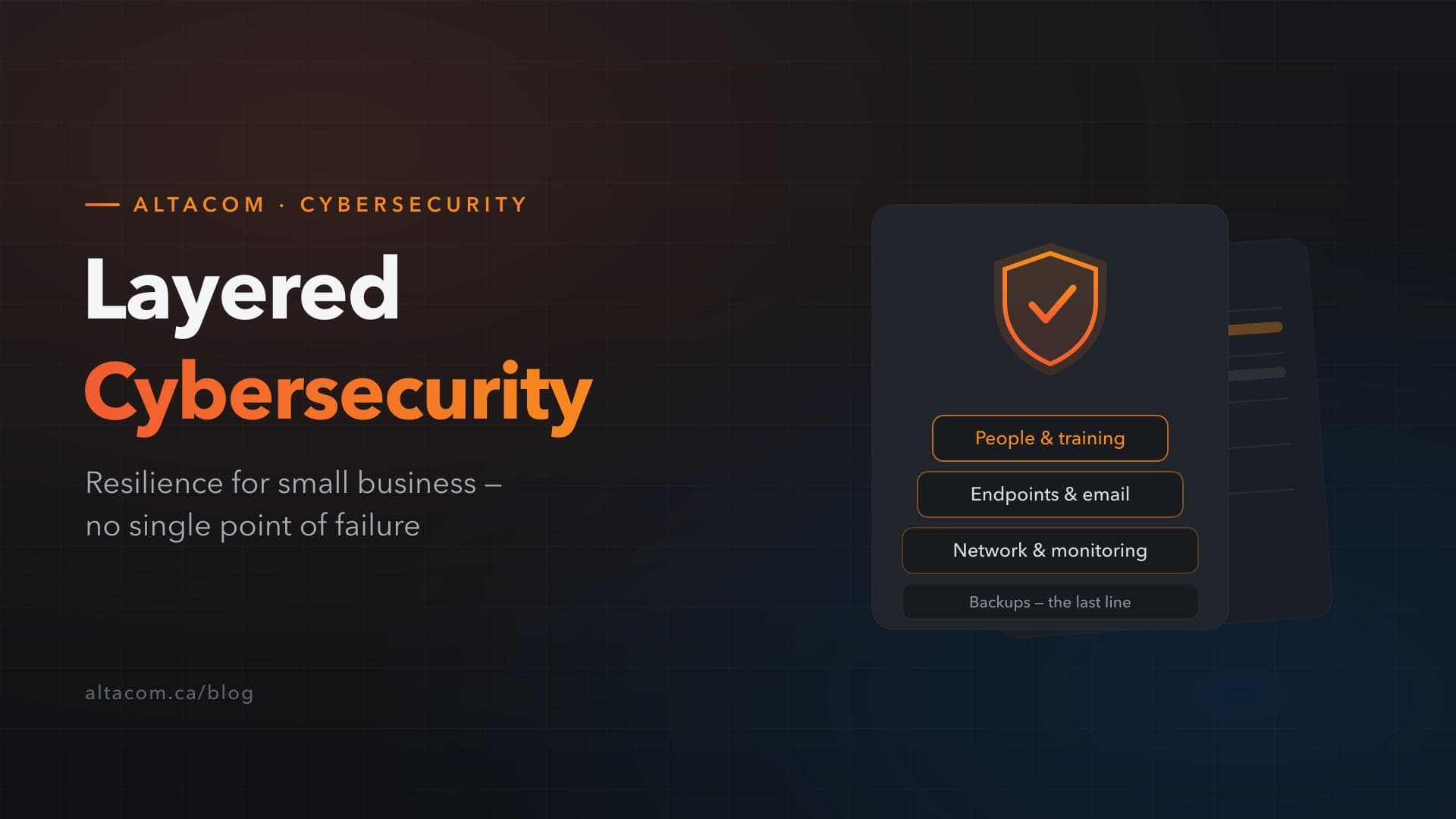
43% of cyberattacks target small businesses, and many lead to severe consequences — significant financial loss and lasting damage to reputation. A layered approach to cybersecurity creates multiple barriers that attackers must overcome.
The Importance of a Layered Approach
- Comprehensive Protection: Different measures cover various vulnerabilities, ensuring a wider safety net.
- Redundancy: If one layer fails, another backs it up.
- Adaptability: Adjust to new threats as the landscape shifts.
- Cost-Effectiveness: A variety of efficient tools often affords better protection than a single high-priced solution.
60% of small businesses close within six months of a cyberattack. This emphasizes the need for a resilient strategy.
Key Layers of Cyber Security
1. Network Security
- Firewalls: Install and regularly update firewalls to filter traffic and block unauthorized access.
- VPNs: Encrypt data transmitted over the internet, especially for remote workers.
- Segmentation: Divide your network into segments to limit the blast radius of a breach.
2. Endpoint Security
- Antivirus Software: Ensure all devices have up-to-date antivirus protection.
- Device Encryption: Encrypt sensitive data stored on devices.
- Regular Updates: Up to 85% of successful cyberattacks exploit known vulnerabilities for which patches already exist.
3. Data Security
- Regular Backups: Use both local and cloud backup schedules to minimize data loss risk.
- Access Controls: Limit access to sensitive information based on user roles.
- Data Loss Prevention (DLP): Monitor and protect sensitive data from unauthorized sharing.
4. Employee Training
- Phishing Simulations: Regularly simulate phishing attacks to teach employees to recognize suspicious emails.
- Security Policies: Develop clear, easy-to-follow security policies including strong password practices.
- Regular Updates: Keep employees informed about new cyber threats and best practices.
5. Incident Response Plan
- Identify Roles: Choose a dedicated response team with clear responsibilities.
- Response Procedures: Document processes for identifying, managing, and recovering from incidents.
- Regular Drills: Run tabletop exercises to test plan readiness and reduce recovery time.
Final Thoughts
Do not let your business become another statistic. Contact AltaCom today for a comprehensive cybersecurity consultation and discover how our tailored, layered approach can fortify your defenses and ensure business continuity.